A NEW STANDARD OF CARE
Fifty percent of patient tumors are categorized grade 2, requiring oncologists to rely on further testing. But large percentages of patients with grade 2 and 3 tumors are eventually discovered to be low risk of distant recurrence.


OncoIntelligence™ analyzes a digitized H&E-stained slide and quantifies the morphologic features & clinical factors that impact the risk of disease recurrence.
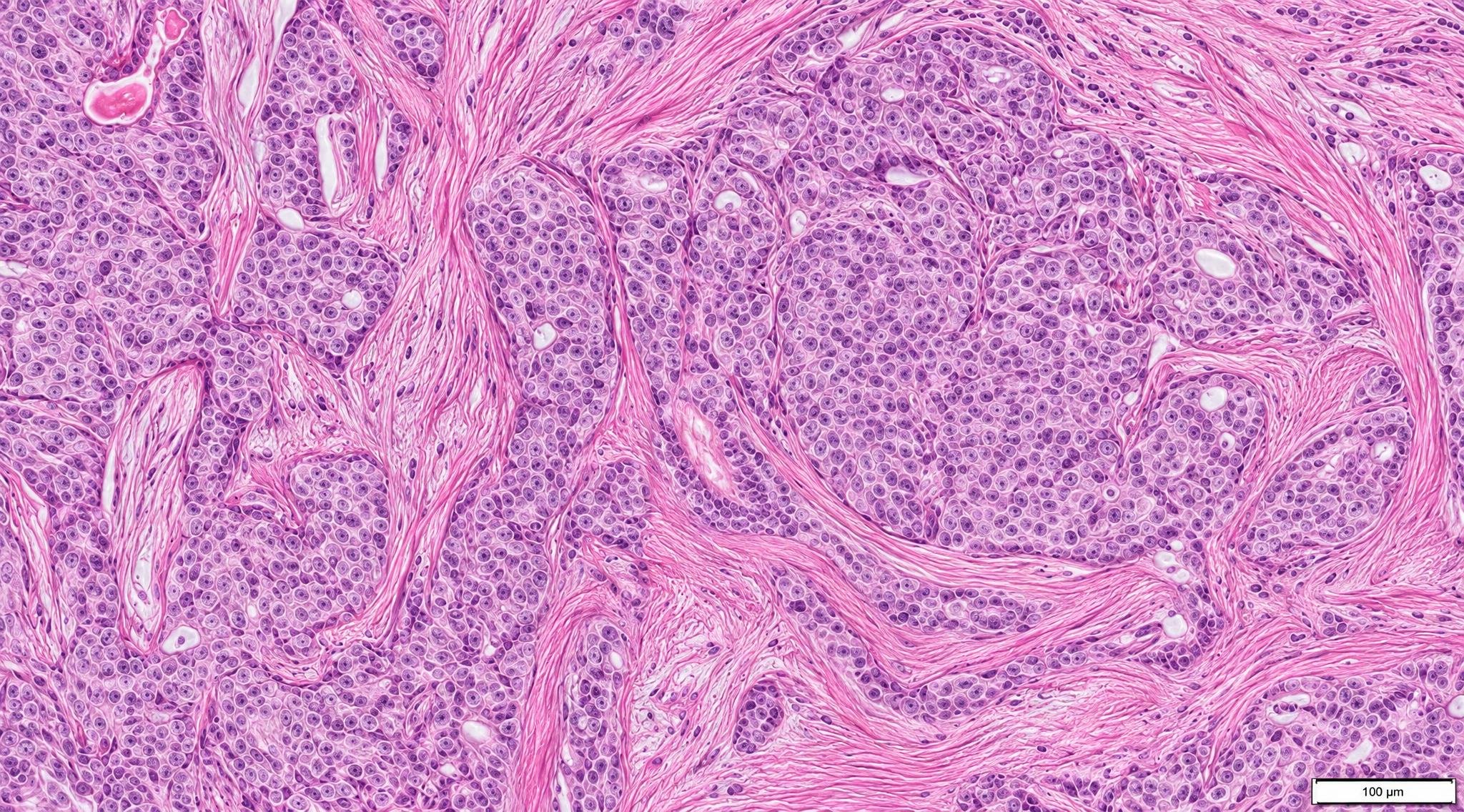
PreciseDx first digitizes the same diagnostic H&E-stained slide pathologists use for tumor grading.

OncoIntelligence, our AI-platform, analyzes every cell from the digitized image, objectively quantifying morphology features that most predict breast cancer recurrence.

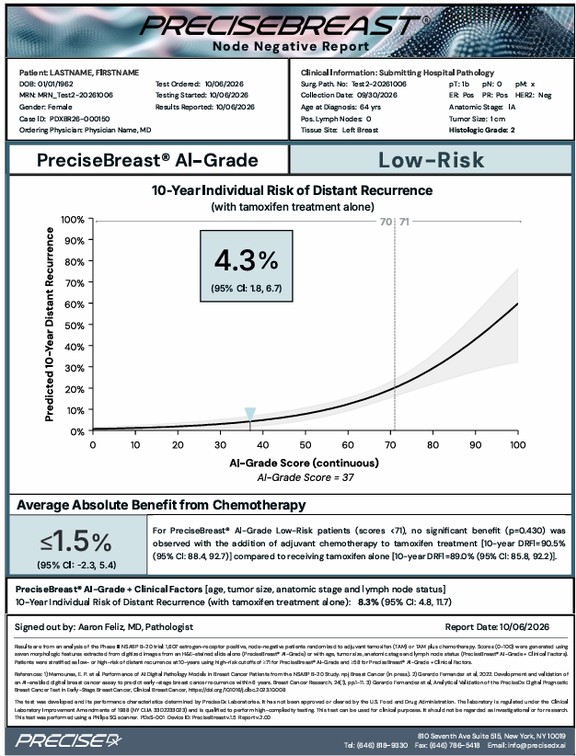
The proprietary algorithm delivers the quantitative assessment of the morphology features as an AI grade for use in our proprietary algorithm that also includes four clinical factors.

The PreciseBreast AI-Grade Score is the output of the proprietary algorithm.

Landmark Level 1B evidence utilizing H&E slides


LEARN MORE, FASTER.
PreciseBreast® provides an earlier assessment of an individual patient's 10-year distant recurrent risk in hours.
1. Mahtani, R. L. 2024. PreciseBreast, an AI-enabled digital test predicting breast cancer recurrence is equivalent with Oncotype in an observational, retrospectivestudy of patients from Baptist Health Miami Cancer Institute in partnership with COTA, Inc. [Poster]. SABCS, Dec. 9, 2024, San Antonio, TX.
The use of subjective grading alone is discouraged.⁴ Levels of inter-observer variation can and should still be improved.⁵ Histologic grade includes pathologist-assigned tubule formation, nuclear pleomorphism, and mitotic count. Grading variability may have influenced adjuvant chemotherapy decisions in 30% of patients.⁶ ⁹

57-70%
pathologist inter & intra-observer variation⁷ ⁸
54.7%
of Grade 3 tumors are low risk²
25.9%
of Grade 2 tumors are high risk²
74.1%
of Grade 2 tumors are low risk²

PreciseBreast® delivers benefits for physicians, patients and payors.

10-year distant recurrence risk

Earlier results lessen anxiety for patients

Lower overall testing and treatment costs

Worldwide access to PreciseBreast®
OUR PROCESS
The results of slow or unavailable gene-expression testing can impact patients and their anxiety levels during a critical time in their lives. These are their stories of how PreciseBreast might have made a difference.
Contact us today to learn more.